
Single-visit root canal treatment
Root canal treatment removes the infected nerve inside a tooth, cleans and seals its canals, and lets you keep the tooth. When the tooth allows, it is done in one visit.
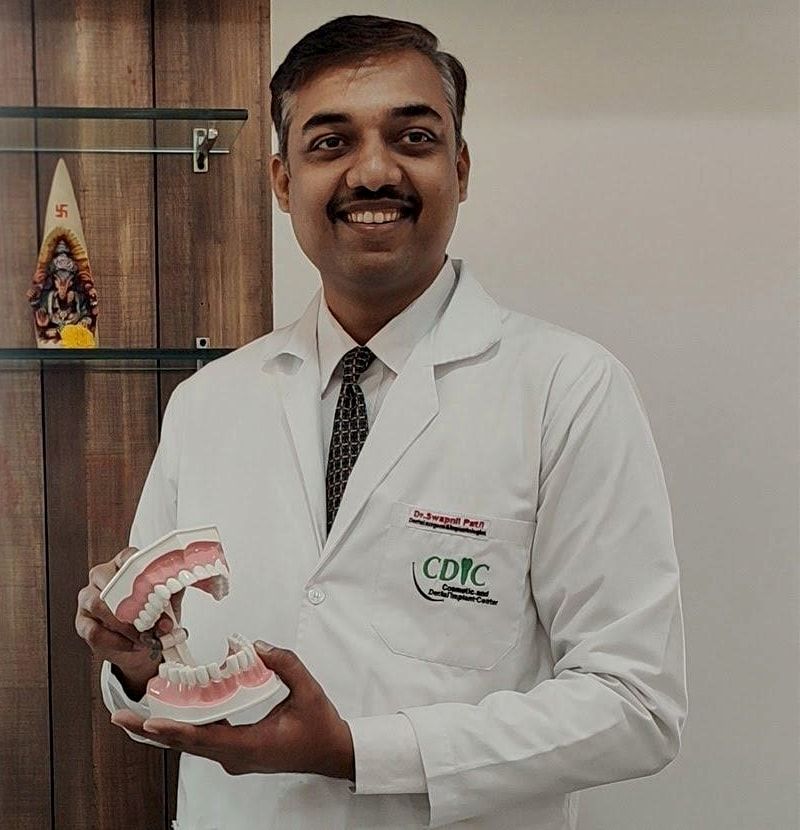
Draft, awaiting review by Dr. Swapnil B. Patil, BDS
What a root canal is
Inside every tooth is a soft core of nerve and blood vessels, called the pulp. A deep cavity, a crack or a knock can let bacteria reach it. Once the pulp is infected it cannot heal on its own: it either dies quietly or flares into pain and swelling, and the infection can spread to the bone at the tip of the root.
Root canal treatment removes the pulp, cleans the narrow canals inside the roots, and seals them so bacteria cannot get back in. The tooth stays in your mouth and keeps doing its job, instead of being taken out.
One visit or two
In a single visit, everything from numbing the tooth to sealing the canals happens in one sitting. That suits most teeth where the infection is contained. When there is a large abscess, swelling, or canals that are very curved or narrow, it is safer to clean the tooth, leave medicine inside and finish at a second visit. Either way, you hear which applies, and why, before treatment starts.
Why a crown often follows
A tooth that needed a root canal has usually lost a good part of its structure to decay or old fillings. Back teeth take the full force of chewing, and a weakened one can crack. A crown holds it together. Whether your tooth needs one is decided on what is left of it, not as a routine add-on.
It may suit you if
- A tooth aches on its own, or the pain wakes you at night
- Hot or cold brings on pain that lingers after you swallow
- A tooth hurts when you bite down or chew
- There is swelling, or a small boil on the gum beside a tooth
- An X-ray shows infection at a root tip, even if nothing hurts yet
Suitability is confirmed at your examination, never from a web page.
If you would rather wait
Pain from an infected nerve sometimes fades when the nerve dies, but the infection stays and can spread into the bone around the root. Waiting usually makes the problem bigger and can cost the tooth. If you are not ready to decide, we examine it, explain what we see, and set out every option, including removing the tooth, with its cost.
Step by step
What happens at each stage, and roughly how long it takes. Your own timings are set out in your written plan.
Step 1: Examination and X-ray
We look at the tooth, test how it responds to cold and to tapping, and take an X-ray to see the roots and the bone around them.
If the tooth cannot be saved, we say so before anything else happens, and explain the alternatives.
Step 2: Numbing the tooth
Local anaesthesia numbs the tooth and the gum around it. We check that it is fully numb before starting.
Raise a hand at any point. We stop, and add more anaesthetic if you need it.
Step 3: Cleaning and sealing the canals
A small opening is made in the top of the tooth. The infected pulp is removed, and the canals are cleaned, disinfected and shaped with fine instruments, then filled with a rubber-like material and sealed.
If there is a large abscess, medicine is placed inside the tooth and the sealing is done at a second visit.
Step 4: Closing the tooth
The opening is closed with a filling, and we check your bite so the tooth is not taking more than its share.
Step 5: A crown, if the tooth needs one
A back tooth that has had a root canal is often weak. If it is, a crown is planned to protect it, made over one or two further visits.
The crown is a separate step with its own cost, explained before it is made.
What the cost covers
Cost rangeOn request. Ask on WhatsApp for the Single-visit root canal treatment price range
Included
- The examination and the X-rays taken during treatment
- Local anaesthesia
- Cleaning, shaping and sealing every canal in the tooth
- A filling to close the tooth
Sometimes needed, at extra cost
- A crown to protect the tooth afterwards
- A post inside the root, when too little tooth is left to hold a crown
- A second visit, when an abscess needs medicine placed first
Anything extra is explained, with its cost, before it is done.
Risks and recovery
Every treatment carries some risk. These are the ones to know about, and what is normal while you heal.
- The tooth may be tender to bite on for a few days. Ordinary painkillers usually settle it; we tell you which to take.
- A treated tooth is more brittle. Until its crown or final filling is in place, chew hard food on the other side.
- Occasionally an infection returns, or a canal is too curved or blocked to clean completely. That can mean treating the tooth again, a small procedure at the root tip, or removing it.
- Rarely, a fine instrument separates inside a canal. If that happens we tell you, and explain what it means for the tooth.
- Call us if swelling grows after the second day, if you develop a fever, or if the pain is getting worse rather than better.
Have it at our Wakad clinic
Wakad
Prime City Center, A-6 & B-3, Datta Mandir Road, Shankar Kalat Nagar, Wakad, Pune 411057
Hinjewadi
Our second clinic
Office 102, Adora Commercial Wing, Bhumkar Chowk to Laxmi Chowk Road, Hinjawadi, Pune 411057
What patients say
Read all reviews4.9out of 5
From 578 Google reviews across both clinics, counted in October 2026.
I recently visited CDIC for a tooth pain, which led to a root canal, a cap fitting, and one tooth extraction … From the very first appointment, the doctor explained every step clearly
Questions people ask
Not here? Ask us directly. We reply during clinic hours, till 9 pm.
Ask on WhatsAppDoes a root canal hurt?
The tooth is numbed with local anaesthesia, so most people feel pressure rather than pain, and many say it was easier than they feared. The aim is a painless technique; some tenderness for a few days afterwards is normal and usually settles with ordinary painkillers.
Can every root canal be done in one visit?
No. One visit suits most teeth where the infection is contained. A large abscess, swelling, or canals that are hard to reach are safer treated over two visits, with medicine inside the tooth in between. You will know which applies before treatment starts.
Is it better to have the tooth taken out?
Keeping your own tooth is usually better for chewing and for the teeth beside it. Removal costs less today, but the gap often needs a bridge or an implant later. We set out both options, with their costs, so you can compare.
Will I need a crown afterwards?
Often, for back teeth, because they take the force of chewing and a treated tooth is more likely to crack. A front tooth with plenty of structure left may only need a filling. We tell you which, and why.
How long does a tooth last after a root canal?
With a sound filling or crown and ordinary care, a treated tooth can last for many years. It can still decay, so brushing, cleaning between teeth and check-ups matter as much as before.
Related treatments
Crowns and bridges
A crown is a cap that covers and protects a weakened tooth. A bridge replaces one or two missing teeth by fixing a false tooth to the teeth on either side of the gap.
Surgical tooth removal
When a tooth cannot simply be lifted out, because it is buried, broken at the gum line or has curved roots, it is removed surgically through a small opening in the gum, under local anaesthesia.
Questions before you decide?
Call or message us, or ask for a time. We reply during clinic hours, till 9 pm.